
What Makes the Stussy Hoodie Different From Every Other Pullover
The Stussy hoodie sits in this strange middle space that most streetwear brands try to copy and almost always miss. It’s heavy without feeling like a winter coat. It’s loud without screaming. And honestly, after wearing one almost weekly for nearly three years, I can tell you the cotton breaks in a specific way that cheaper imitations never quite manage. The hand-scripted logo, that famous graffiti-style wordmark, ages with the fabric instead of cracking off after a handful of washes. That’s the small detail people don’t talk about enough. Meanwhile, the shoulder seams sit just slightly outside the natural shoulder line, which is why the silhouette photographs well even when you’re just standing around. Most people who buy their first Stussy piece end up coming back within six months for a second one, and there’s a real reason for that pattern. The construction earns the loyalty. You’re paying for a pullover that lasts past trend cycles, not a logo tax. To be fair, the price tag isn’t small, and I won’t pretend otherwise. But when you divide the cost across however many wears you actually get out of it, the math starts looking very different from a fast-fashion alternative that pills after the third spin in the washing machine. That’s the honest case for the hoodie, and it holds up across colorways, fits, and even the slightly experimental drops that come out every season.
The California Roots That Still Shape Every Drop
To understand why the brand still matters in 2026, you have to look back at where it actually came from. Shawn Stussy started signing surfboards with a marker in the early 80s, and that scribbled signature became one of the most recognized wordmarks in streetwear history. Although the brand has grown massively since then, the design language hasn’t drifted far from its origin. You can still feel the surf-and-skate DNA in every drop. Even the newer collaborations carry that loose, hand-drawn energy that separates Stussy from logo-heavy luxury labels trying to play in the same space. As streetwear coverage like Hypebeast’s archive shows, the brand has stayed culturally relevant through three full decades of trend cycles, which is genuinely rare. The reason behind that longevity, in my opinion, is restraint. The brand doesn’t drop fifteen colorways of the same hoodie just to chase volume. Drops feel curated, and that gives each piece a little more weight when you actually own one. Beyond that, the California aesthetic translates surprisingly well into colder climates too, which I never expected when I first started buying pieces. The relaxed cuts work in layers, and the muted earth tones blend into autumn wardrobes without effort. So even if you’re nowhere near a beach, the brand still makes sense in your closet. That said, the brand isn’t perfect, and the warehouse drops sell out within hours on the bigger releases, which can get genuinely frustrating if you miss a notification.
The Five Things I Check Before Buying Any Stussy Hoodie
After years of buying and a few honest mistakes, I narrowed down a checklist that I run through before pulling the trigger on any pullover from the lineup. This isn’t gatekeeping, just real lessons. Each point comes from a piece I either kept forever or returned within a week. Take what’s useful and skip what isn’t.
- Fabric weight first.The heavyweight fleece versions hold their shape best. Anything below 380 gsm tends to lose structure faster, especially around the hood.
- Logo placement and print depth.Run your finger across the print. If it sits flat against the surface like a sticker, it’ll crack within months. Proper screen prints have a slight texture you can feel.
- Hood structure when worn up.A good hood frames the face without collapsing flat. The cheap versions sag immediately after the first wash.
- Stitching at the kangaroo pocket corners.This is where most pullovers fail first. Look for reinforced bar tacks, not just straight stitches that come undone.
- Sizing versus your actual frame.Stussy generally runs slightly oversized, but the cut varies between pullover styles and zip-up versions, so don’t assume your size translates across the catalog.
That checklist saves me money every single time. And if you’re shopping the Stussy hoodie range right now, those five points will tell you within ninety seconds whether a piece is worth the spend or whether you should keep scrolling. Don’t skip the fabric weight one. That’s the single biggest predictor of how long the hoodie will stay in your rotation versus getting demoted to “wear it around the house” status within a year.
How to Style It Without Looking Like You’re Trying Too Hard
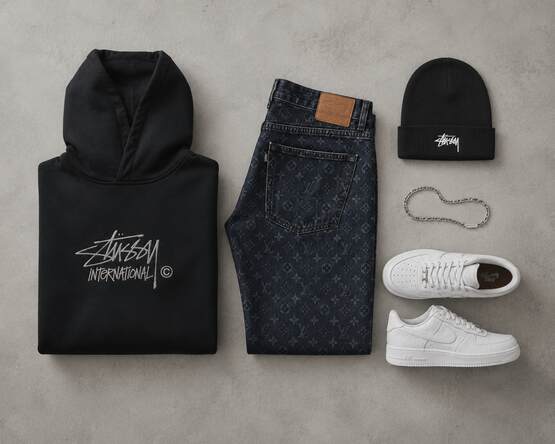
Styling a Stussy hoodie is mostly about resisting the urge to do too much around it. The piece already carries enough visual weight on its own, especially the colored or graphic-heavy drops, so you want everything else in the fit to step back and let the hoodie sit at the center. My personal go-to is honestly the most boring combination on paper, but it works every single time. Dark slim or relaxed jeans, low-top sneakers in white or off-white, and a beanie if it’s cold enough to justify one. That’s it. No layers fighting each other, no logos competing across the chest and the legs, just one statement piece anchoring everything. For a slightly elevated version of that base outfit, you can swap in monogram denim like the Mixed Emotions shirt and denim collection runs, which carries its own subtle pattern without clashing with the hoodie’s graphic. The colors and washes layer beautifully under a heavier pullover. Meanwhile, footwear is where most people overthink things. Chunky dad sneakers can work, but they often pull focus from the hoodie, so I usually default to something cleaner. Court silhouettes, low-top runners, or even a clean leather sneaker all do the job. On colder days, throw a tan or olive workwear jacket over the whole thing for that classic skate-meets-utility energy that’s been popular for the last two years. Don’t overthink the accessories either. One small piece, maybe a cap or a single chain, and you’re done. Streetwear works best when the focal piece does the heavy lifting and everything else stays quiet around it.
Why Mixing Brands Actually Builds a Stronger Wardrobe
Here’s something most style guides won’t tell you directly: pure brand loyalty actually weakens your wardrobe over time. You end up with five hoodies that all read as the same brand from across a room, and your fits start looking like uniform variations instead of distinct outfits. Mixing brands strategically is how serious streetwear collectors build depth into their rotation. So when I rotate my Stussy pullovers, I deliberately pair them with pieces from other labels that bring something different to the table. Below are some of the cross-brand pairings I lean on most:
- Stussy hoodie + relaxed Amiri denim— the soft, broken-in denim sits well under the heavier fleece weight
- Stussy graphic tee + monogram cargo pants— lets the tee breathe while the bottoms carry their own pattern
- Stussy sweatshirt + technical sneakers— softens the casual silhouette with something a bit more elevated
- Stussy beanie + rhinestone hoodie from another label— small Stussy accessory anchoring a louder centerpiece
- Stussy shorts + chunky leather sneakers— works surprisingly well in late summer rotations
The denim pairing is honestly my favorite combination of the bunch, and the tenis amiri range completes that exact look on the footwear side. Their sneaker silhouettes have just enough visual weight to balance an oversized hoodie without dragging the fit into “too much going on” territory. You don’t need to spend a fortune to make this work either. One quality piece per category, rotated thoughtfully, beats ten cheap pieces that all collapse within six months. Build slow, buy considered, and your closet becomes something you actually want to wear from rather than dig through every morning.
What Real Wear Looks Like After 18 Months
People rarely talk about how streetwear pieces actually age, which feels like a massive gap in honest reviews. So here’s my real experience with my oldest Stussy hoodie, which has been in heavy rotation since late 2024. The color has softened by maybe one or two shades, which I genuinely prefer over the original deep tone. The cuffs have stretched out slightly, but not in a way that looks worn out, more like they’ve molded to my wrists. There’s a small bit of pilling under the arms where my jacket sleeves rub against the fabric during winter, though it’s barely noticeable unless you look for it. The print on the back has held up almost perfectly, with just one tiny crack appearing near the bottom edge where the fabric folds during washing. And the hood still holds its shape when I pull it up, which is honestly the test that most cheaper pullovers fail spectacularly within the first six months. Now, the limitation I have to be honest about is washing. You can’t just throw a Stussy hoodie in with everything else on a hot wash and expect it to come out looking the same. Cold water, inside out, gentle cycle, air dry. Skip those rules and the print will degrade faster than you’d like. So yes, there’s some care involved, but it’s not extreme, and the payoff in longevity makes the small effort completely worth it. After 18 months, my hoodie still looks like a hoodie I’d happily wear out, which is more than I can say for almost anything else I’ve bought in the same price range from competing labels.
Where Stussy Fits in the Current Streetwear Landscape
Streetwear in 2026 looks very different from streetwear five years ago, and the brands that have survived this stretch are the ones that didn’t chase every passing trend. Stussy fits into that category cleanly. While loud logo-mania has cooled off and consumers have shifted toward quieter, more considered pieces, the brand’s design language has actually moved closer to where the market sits today. That’s not luck. It’s the result of a brand that was already restrained before restraint became fashionable, which gives them a kind of authenticity that newer labels have to manufacture. Compared to other heritage streetwear names, Stussy still feels distinctly Californian in a way that translates globally. You can wear it in Tokyo, Berlin, Lahore, or LA and it reads correctly in all four cities, which is rare for a brand with such specific regional roots. Personally, I think they’re at their strongest when they stick to the basics and let the wordmark do the talking, rather than the occasional experimental drop that tries to be too clever with placement or color. Those experimental pieces usually sit unsold longer, which tells you the customer base already knows what they want from the brand. Looking ahead, I expect the brand to keep doing what it does best, which is releasing well-constructed essentials with clean graphic work and the occasional collaboration that genuinely adds something instead of feeling forced. As long as they keep resisting the pressure to release fifteen colorways of every piece just to chase volume, they’ll stay in the rotation of serious streetwear buyers for another decade easily.
Caring for the Hoodie So It Lasts Longer Than You Expect
Care is the part most buyers ignore until they ruin their first piece, and then suddenly everyone wants to know the right method. Here’s what actually works based on three years of trial and a couple of expensive mistakes I’d rather not repeat. Wash cold, always. Hot water destroys both the fabric structure and the print integrity, so don’t shortcut this even when you’re in a rush. Turn the hoodie inside out before it goes into the machine. This protects the graphic from rubbing against the drum and against other rougher fabrics like denim. Use a mild detergent, not the heavy-duty kind designed for stained workwear. Stussy fleece is sensitive to harsh chemicals, and you’ll see the difference within ten or twelve washes if you use the wrong soap. Skip the dryer entirely. Air drying takes a day or two longer, but it preserves the cut, the print, and the elasticity of the cuffs simultaneously, which the dryer kills faster than anything else. Hanging the hoodie wet can stretch out the shoulders, so I usually lay mine flat on a clean towel during the first few hours, then transfer to a hanger once the heaviest moisture is gone. For storage during off-seasons, fold rather than hang. Hangers leave shoulder bumps in heavyweight fleece that can take weeks to settle back out once you start wearing the piece again. And finally, spot-clean small marks instead of throwing the whole hoodie in the wash for one tiny coffee stain. Excess washing is what shortens the life of premium streetwear more than anything else, including time itself. Treat the piece like the investment it actually is, and it’ll keep showing up in your rotation long after similar pieces from cheaper brands have ended up in the donation pile.
Final Words
The Stussy hoodie isn’t perfect, and it isn’t the only streetwear piece worth owning, but it’s earned its spot in my rotation through years of actually wearing it rather than just sitting in a wardrobe rotation photo on social media. The construction holds up, the design language has stayed relevant without chasing trends, and the brand has resisted the pressure to over-release that has weakened so many of its competitors in the same price range. So if you’ve been on the fence about your first Stussy piece, my honest take is to start with a basic colorway in heavyweight fleece, learn how the brand’s sizing sits on your frame, and build out from there over the next six to twelve months. You’ll figure out pretty quickly whether the brand fits your style or not, and either way, you’ll know more about your own taste than you did before. That’s the real value of buying considered streetwear from labels that have something to say, instead of stacking your closet with disposable pieces that all blur into each other within a year.
Frequently Asked Questions
Is the Stussy hoodie worth the price compared to fast fashion?
Yes, if you actually wear it regularly. The cost-per-wear math works heavily in Stussy’s favor over a two-to-three year window, especially because the fabric and prints survive far more washes than cheaper alternatives that pill or crack within months.
What size should I buy if I’m between sizes?
Most Stussy hoodies run slightly oversized already, so if you prefer a closer fit, size down. If you want the relaxed, slightly drop-shoulder silhouette that’s become the signature streetwear look, stick to your usual size.
Does the hoodie shrink after the first wash?
Minimal shrinkage if you follow the care label. Wash cold, skip the dryer, and you’ll see almost no size change. Hot wash and tumble dry will shrink it noticeably and ruin the print at the same time, so resist the urge.
Are the limited drops really worth chasing?
Sometimes. The collaborative drops with Nike, Dior, and other partner brands hold resale value well and feel genuinely special, but the standard logo pieces from the core lineup deliver better day-to-day wear value for most buyers.
Can I machine wash a Stussy hoodie regularly?
Absolutely, just keep it cold, inside out, and on a gentle cycle. The construction is built to handle regular washing, but harsh detergent, hot water, and tumble drying will degrade both the fabric and the print far faster than the brand intends.
Read More: mitsuri backstory